Agentic outreach
AI vs Human Connection Notes, Expandi Flips the Script
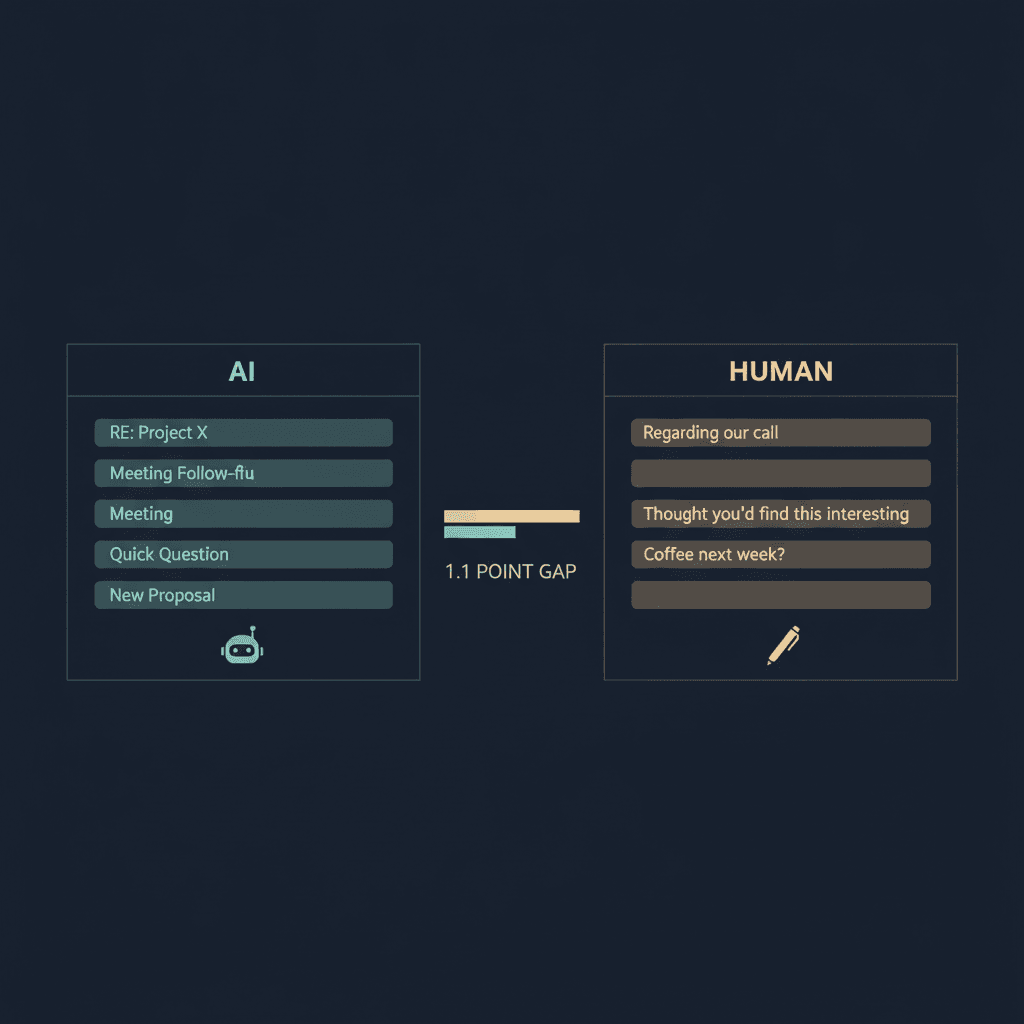
Expandi's H2 2026 within-account study found human templates beat AI-personalised connection notes on acceptance by ~12%. Here's what to actually change on Monday.
By Luke Henrik8 min read

TL;DR
- Expandi's within-account H2 2026 analysis across 118 campaigns from 73 accounts found AI-hyperpersonalised connection requests accepted about 12% worse than the same accounts' human-written templates, with reply rate flat.
- The across-account number (20.4% vs 17.3% acceptance) favours AI only because better operators adopt AI faster. Hold the operator constant and the lift disappears.
- Pangram Labs found 40.5% of long-form LinkedIn posts over 250 words are entirely AI-generated, so prospects now pattern-match AI copy at scroll speed. That's the real cost of unedited AI notes.
- Use AI for research, variable extraction, draft scaffolding, follow-up triage and post-accept messages. Write the connection note sentence yourself. Cap at 180–220 characters, one variable, no compliment, no pitch.
- Anchor Q4 campaigns to 28.5% acceptance (floor), 3.0% note reply, three-message sequences and morning sends for the 8-point timing lift.
On this page
- What the H2 2026 Expandi data actually says
- Why the gap flipped between H1 and H2 2026
- Pattern saturation is the real cost of ai personalization linkedin notes
- What still works on the connection note itself
- AI-assisted, human-voiced, concrete copy rules
- Where AI still earns its seat
- Benchmarks to target on Linkedcamp in Q4 2026
- The counter-narrative, and why it's not wrong
Expandi published its H2 2026 State of LinkedIn Outreach report with a finding that most SDR leaders skimmed past. Within the same accounts, AI-hyperpersonalised connection requests accepted about 12% worse than those accounts' own human-written templates. Reply rate was unchanged.
The primary keyword here is ai personalization linkedin, and the usual story we tell about it just broke. Across 13.2 million requests, AI-using accounts looked like winners. Inside those same accounts, the AI version lost to the human version on the only metric a connection note has to move.
This isn't a repeat of the Q2 reply-rate story we covered in AI vs Human LinkedIn Messages. 1.2M-Send Reply Data. That post was about post-connect message replies. H2 is about the invite itself, and the gap moved from flat to negative. If you write your own outbound, the playbook needs an edit this week.
What the H2 2026 Expandi data actually says
The headline sample everyone quotes is the big one. Expandi analysed 13,218,869 connection requests and 6,730,447 outbound messages across 13,302 active accounts between May 2025 and April 2026. Platform averages landed at 28.5% connection acceptance and 3.0% note reply rate.
The AI finding comes from a tighter, cleaner cut. The comparison ran across 118 campaigns from 73 accounts between October 2025 and June 2026, with each account's AI-generated campaigns compared against that same account's human-written campaigns. That within-account design is what matters.
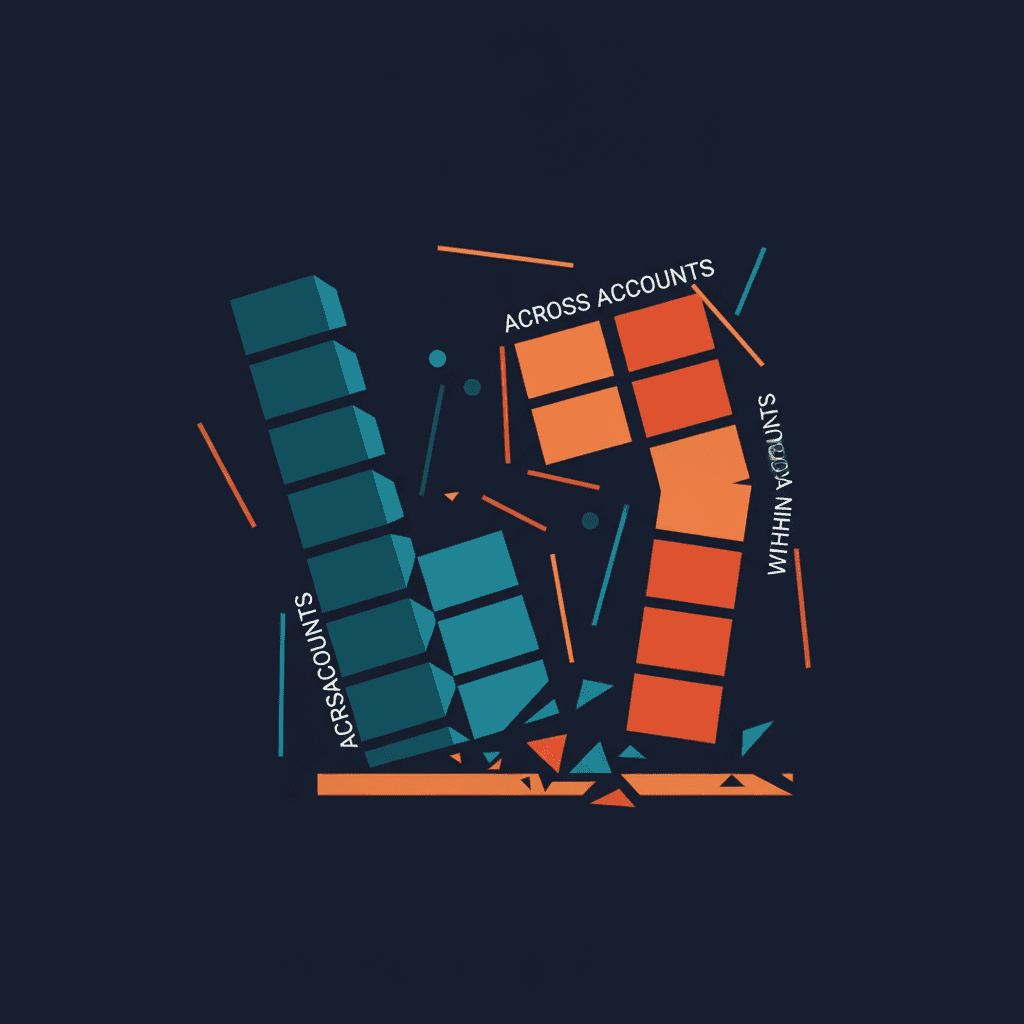
The across-account read is flattering to AI. AI campaigns achieved 20.4% acceptance and 6.5% reply rate, versus 17.3% acceptance and 4.6% reply from the broader non-AI population. Read that out loud and it sounds like a clean win.
Then Expandi controlled for the account. When they compared AI-generated campaigns with human-written ones from the same accounts, human copy accepted about 12% better (23.2% against 20.4%), and reply rates were flat. The AI premium wasn't AI. It was selection bias. The operators who adopt AI already run better campaigns.
Across accounts, AI looks like a lift. Within accounts, it's a tax.
Why the gap flipped between H1 and H2 2026
Two things changed between the H1 reply-rate benchmarks and this H2 cut.
First, saturation. Connection-request reply rate dropped from 3.5% in May 2025 to 2.2% in April 2026, a 37% relative decline over the year. That's not a rounding error. That's a channel being pattern-matched out of existence by prospects who scroll past the same AI openers twice a day.
Second, exposure. Reddit replies stayed 98.1% human-written while LinkedIn top-level posts hit over 40% fully AI-generated, Pangram data from 1,002,627 scanned posts shows now. Pangram Labs found that 40.5% of long-form posts exceeding 250 words on LinkedIn are entirely AI-generated. Your prospects are reading AI posts all day and now receiving AI connection notes. The detector in their head is tuned.
There's a receipt for the behavioural effect too. Originality.ai's study found AI-generated posts on LinkedIn received an average of 45% less engagement than human-authored posts across its dataset. The same scepticism that downranks AI feed content downranks AI invites.
LinkedIn is also leaning in. The platform rolled out a "seems like AI slop" button that lets users flag posts they suspect were written by a machine rather than a person. Flagged posts see reduced reach, and the original poster receives a private notice in their analytics dashboard suggesting the content may have come across as inauthentic. That's a signal about where the whole surface is heading. We covered the ripple effect for agencies in LinkedIn's Oct 2026 AI-Slop Crackdown.
Pattern saturation is the real cost of ai personalization linkedin notes
The reason unedited AI underperforms isn't that the model writes badly. It writes too recognisably. Every AI-personalised invite your prospect receives this quarter opens the same way. Observation about their post. Compliment about their background. Pivot to a soft ask.
Your prospect has seen the shape forty times this month. They don't need a classifier. They've built one.
This is also why the headline ai vs human outreach debate keeps producing contradictory results. If you compare AI-using accounts against everyone else, AI wins because better operators adopt AI faster. If you hold the operator constant, the shape of the AI copy costs you acceptance. Both findings are real. Only one of them tells you what to do on Monday.
What still works on the connection note itself
Before the copy rules, three findings from the same dataset you can run tomorrow.
- Send in the morning. Expandi's H2 research found that morning connection requests were accepted at about 32% compared with about 24% in the evening. An 8-point gap on a free lever.
- Lead with a real tie. Notes based on a genuine LinkedIn connection, such as the recipient already following you or both of you sharing a group or network, reached 1.8 to 2.7 times the 30.2% baseline acceptance rate. That's the ceiling AI cannot fabricate.
- Stop at three messages in the sequence. Three messages produced a 9.8% reply rate in Expandi's H2 2026 research. Five or more fell to 5.0%.
If your connection note copy is good and your targeting is on, timing and sequence length will do more work than any prompt rewrite.
AI-assisted, human-voiced, concrete copy rules
The move isn't "stop using AI." It's "stop letting AI write the sentence." Use AI for research, parsing, variable extraction and draft scaffolding. Write the final line yourself.
Seven rules that hold up against the Expandi finding and the Pangram exposure effect.
- Cap the note at 180–220 characters. Short notes do not pattern-match as AI. Long ones do.
- Open with a specific noun, not an observation. "Saw your Snowflake migration post" beats "Loved your recent post about data infrastructure."
- Kill the compliment. Any sentence that could be sent to 500 people reads as AI even when a human wrote it.
- Don't pitch in the note. The request earns access. Put the clearest value in the first message after acceptance.
- Write the ask in your actual voice. Contractions, incomplete sentences, lowercase openers. Models round these off because training data punished them.
- Use one piece of profile data, not three. AI stacks variables. Humans pick one.
- Add friction the model wouldn't. A hedge, a "maybe," a question that doesn't close. These read as a person thinking, not a system filling slots.
A before/after you can paste.
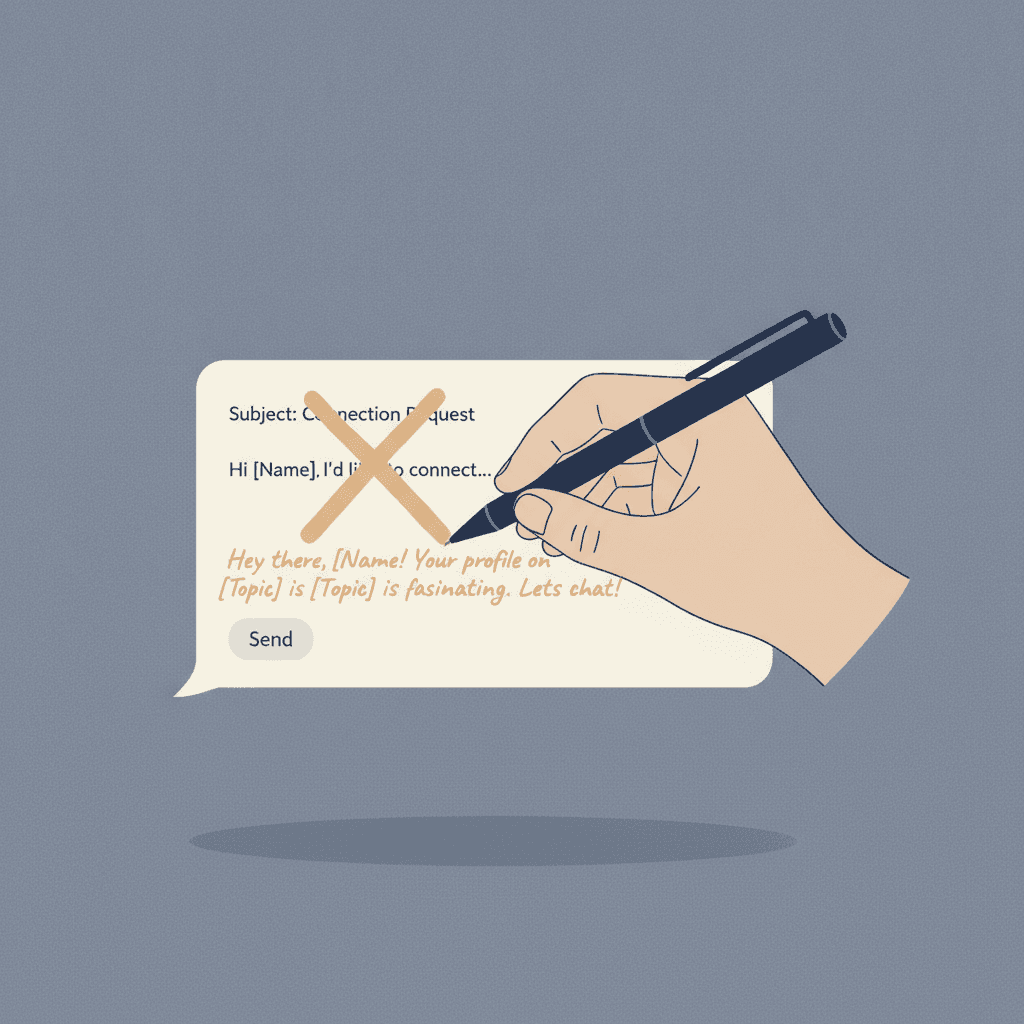
Before (unedited AI). "Hi {{firstName}}, I really enjoyed your recent post on scaling GTM operations at {{company}}. Your perspective on aligning sales and marketing resonated with me. Would love to connect and share ideas."
After (AI-assisted, human-voiced). "Hey {{firstName}}, the thing you said about killing the weekly pipeline meeting. Did that actually stick? Trying to make the same call here."
The second one won't scale to 500 prospects a week. That's the point. We wrote more about this pattern-recognition problem in Why LinkedIn's 360Brew Algorithm Is Killing Generic Outreach.
Where AI still earns its seat
The within-account finding isn't an argument to turn off every model. It's an argument about which step you let the model run.
AI wins at.
- Research. Pulling the recent post, the funding round, the headcount delta, the tech stack. The model is faster than any SDR here and the output never ships to the prospect.
- Variable extraction. Turning a Sales Navigator export into clean fields. No prospect sees the model's prose.
- Draft scaffolding. First pass on 50 notes so a human edits rather than writes from scratch. Expect to rewrite 60-70% of the sentence anyway.
- Follow-up triage. Classifying replies into interested, not now, and not a fit. This is where agents like Linkedcamp's Reply Agent run without pattern-matching risk, because they're reading inbound, not sending outbound.
- Post-acceptance messages. The message after accept is where reply rate lives. AI-drafted, human-edited copy here moves the number because the prospect has already opted in.
AI loses at the one place everyone points it. The connection note itself. That's the step where the model is most visible and the prospect's filter is tightest.
Benchmarks to target on Linkedcamp in Q4 2026
If you're running Linkedcamp and want numbers to hold your campaigns against, anchor to the H2 dataset.
- Connection acceptance. The average LinkedIn connection acceptance rate was 28.5% across 13.2 million connection requests sent through Expandi between May 2025 and April 2026. Treat 30% as the floor on a tight ICP with a human-written note.
- Note reply rate. The average reply rate to connection-request notes was 3.0 percent. Don't optimise for this. Reply rate lives in the post-accept message.
- Three-message cap on the sequence. 9.8% reply rate on three messages, 5.0% at five or more. The curve is not linear and the fifth touch is a tax.
- Morning sends. 32% morning versus 24% evening. If your tool only lets you send "during business hours," tighten the window.
If your campaigns sit under these numbers with human-written copy, the fix is almost never "add more AI." It's targeting, tie-strength, or send timing. For the targeting side we wrote The Bifurcation. Cold Lists Get 3%, Signals Get 55%.
The counter-narrative, and why it's not wrong
Some tools still publish much higher reply rates for AI signal-personalised outreach. Overloop, for instance, references personalised requests landing around 45% acceptance versus 15% generic. That number is real. It's also doing different work than the Expandi finding.
"Personalised" there means any non-generic note, human or AI, written off a real variable. "AI-hyperpersonalised" in Expandi's cut means the full sentence is model-generated. The gap between "a human referenced the right thing" and "a model generated the whole message off the right thing" is the gap that flipped in H2.
So the resolution is simple. Personalisation still wins. AI as the author of the sentence no longer does.