Agentic outreach
AI vs Human Cold Email, The 1.1-Point Reply Gap
A 100K-email matched study pegs the AI-vs-human reply gap at 1.1 points. Here is what it means for AI SDR reply rates in 2026 and hybrid pod economics.
By Luke Henrik8 min read
TL;DR
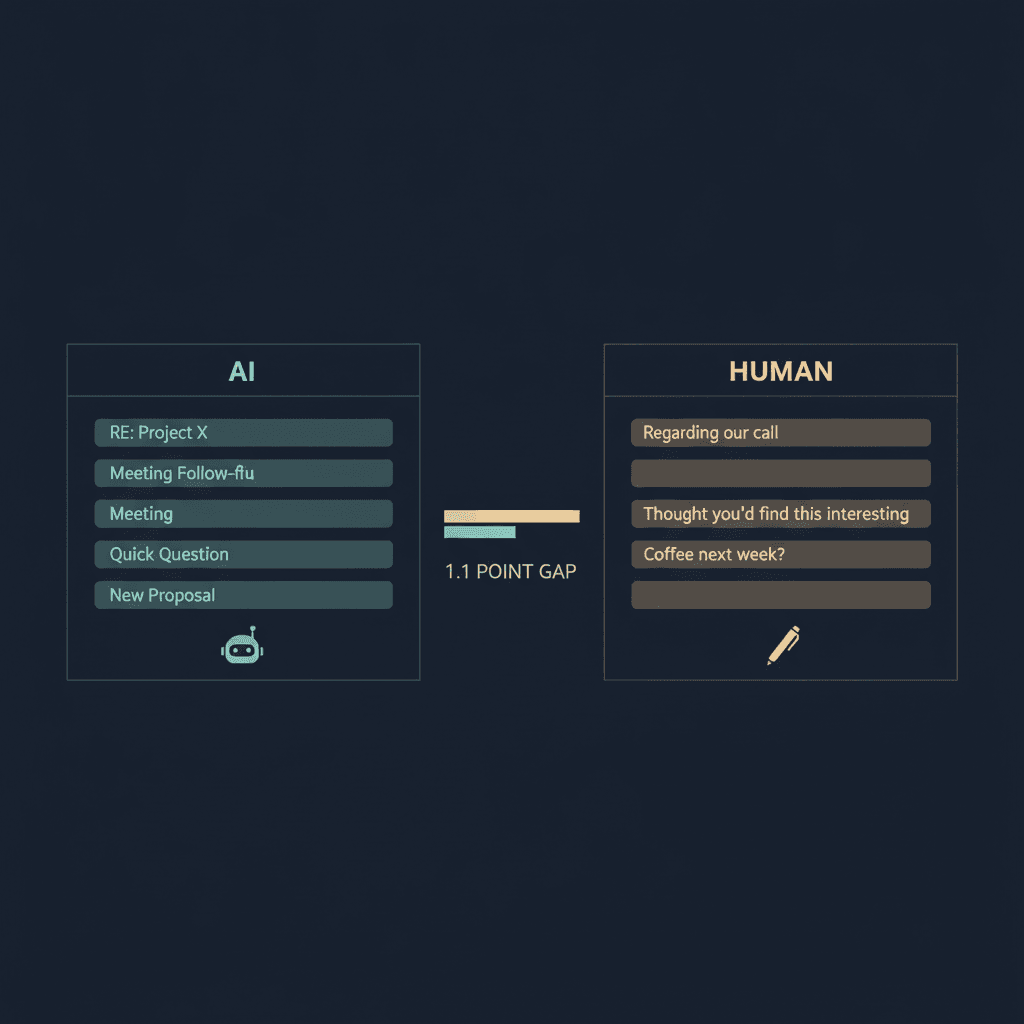
- The Digital Applied 100K-email matched study pegs ai sdr reply rates 2026 at 4.1% vs 5.2% for humans, a 1.1 percentage-point gap. Meetings booked run 0.7% vs 1.1%.
- The gap has closed from roughly 2 points in 2024, but deliverability lags harder than copy. Inbox placement is 71% for AI vs 86% for humans.
- Hybrid wins both parents. Saleshandy's 12K test showed AI-only at 4.1%, human-only at 10.4%, and AI-drafted + human-edited at 14.7%, with spam flags at 3.1% vs 7.8% for AI-only.
- Seniority and account size blow up the AI reply rate. Enterprise and C-suite personas are human-led territory. SMB and mid-market is defensibly AI-first.
- Decision rule tied to the 1.1-point gap. If your ACV absorbs a 1.1-point reply penalty cheaper than a human editor costs, go full AI. Otherwise run hybrid with one editor per 2,500 to 4,000 drafts.
On this page
- What the 100K-email study actually measured
- Why raw reply rates are falling across the market
- Where the ai sdr reply rates 2026 gap closes, and where it opens
- The hybrid arm nobody is talking about enough
- The cost-per-meeting math the vendor pages hide
- Why email is harder than LinkedIn for AI right now
- A decision framework tied to the 1.1-point gap
On 23 September 2026, the sales research site Sales.co published a 55-statistic AI SDR roundup built, among other things, on 1,288,605 AI-written cold emails. A week later ValueSelling Associates picked up its third straight Selling Power AI coaching award. The pattern is clear. AI outbound is no longer the experiment. It is the default. The live question for sales leaders is narrower and more uncomfortable, which is where the primary keyword this post is tracking lives. Ai sdr reply rates 2026 are now measurable on matched data, and the delta against humans is smaller than the discourse suggests.
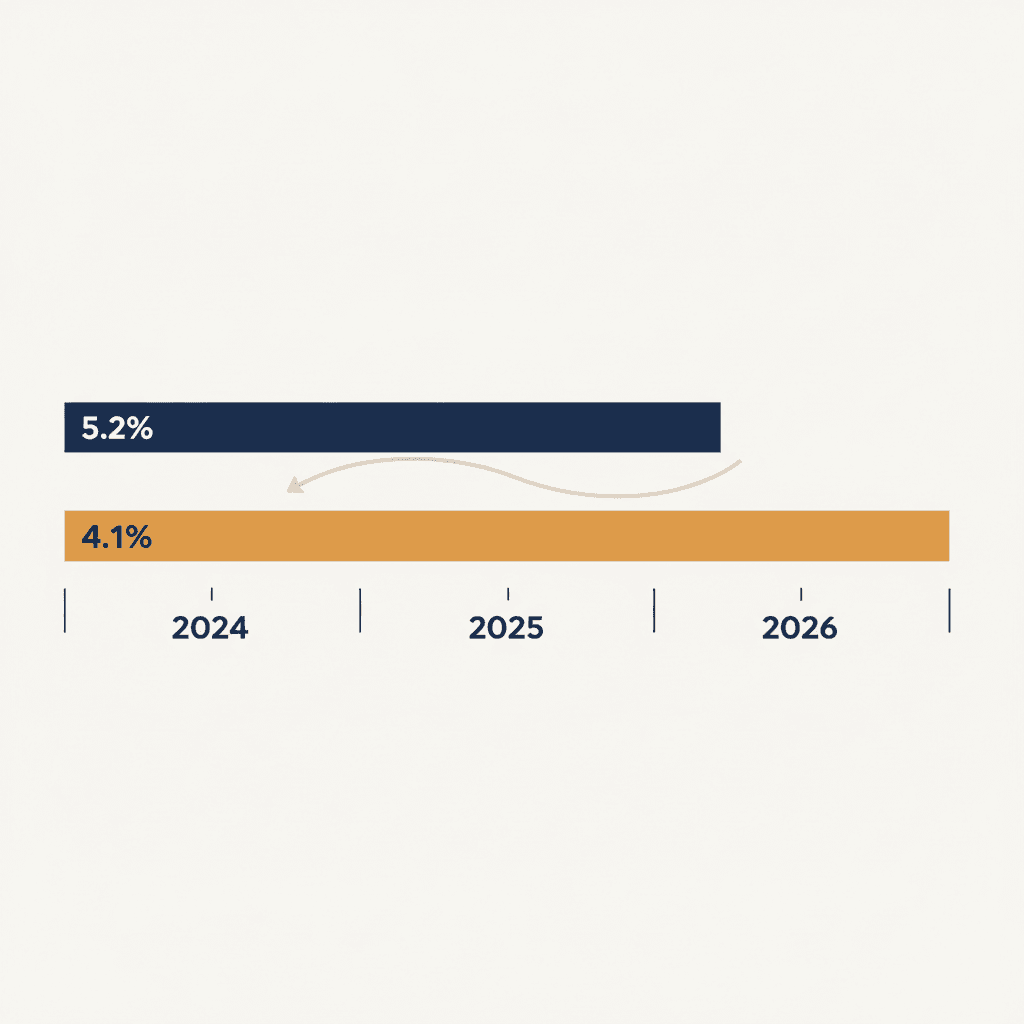
The cleanest number comes from a 100,000-email matched study Digital Applied published in April 2026. On 100K paired sends, AI generated a 4.1% reply rate vs 5.2% for human-written emails. That is a 1.1 percentage-point gap. Meeting-booked rate ran 0.7% AI vs 1.1% human.
If you are deciding between a fully autonomous AI SDR, a hybrid pod with human editors, or a traditional team hitting send by hand, that 1.1-point number is the entire argument. This post unpacks what it actually means, where the gap widens, where it collapses, and the decision framework for Q4 2026.
What the 100K-email study actually measured
Digital Applied's design matters because most AI-vs-human comparisons do not control for list quality, sender reputation, or sequence stage. This one did. Persona, ICP firmographics, sequence stage, sender domain age, and sender domain authority were held constant. The only live variable was authorship.
The raw results are tight but not identical. AI replies came in at 4.1% vs 5.2% for human-written sends, a real but narrowing gap (AI was 2.8% in the 2024 dataset, so up +1.3pp. Human reply rate is flat). In other words, AI copy has improved by more than a percentage point in two years while human copy has gone sideways. The direction of travel is unambiguous.
Where the gap widens is in the quality of replies. Positive-reply rate (excluding OOO, objection, and unsubscribe) is 1.4% AI vs 2.1% human, with the gap more pronounced on positive replies and less on raw response. Roughly 34% of AI replies in the study were substantive. For humans it was 40%. AI pulls more polite declines and auto-responders per thousand sends.
The deliverability gap is wider still. Inbox placement runs 71% AI vs 86% human via Gmail Postmaster and SNDS. That 15-point spread quietly eats into AI's cost advantage every time a sending domain gets flagged.
Why raw reply rates are falling across the market
The 100K study sits inside a cold-email market that has been compressing for three years. The most-cited 2026 baseline comes from Instantly. Their analysis found that top performing elite cold email campaigns exceed a 10% reply rate, top quartile achieve 5.5% reply rates, and the average reply rate is 3.43%. Across three independent 2025 to 2026 datasets totalling more than 70 million emails, the average B2B cold email reply rate lands between 3.43% (Instantly, 2026) and 5.8% (Belkins, 2025 study).
On the volume side, AI adoption has scaled fast enough to visibly dilute inbox attention. AI SDR is now the baseline, with 72% adoption, a $3.1B market, and 42% annual growth. Compensation data from Pave shows the share of employees with SDR job titles fell from 1.9% to 1.5% over about two and a half years, about 8,000 fewer SDRs in its dataset (January 2026). Fewer humans typing, more agents sending, flat inbox capacity. Reply rates compress.
That is also why practitioners increasingly ignore raw rates in favour of positive reply rate. The Instantly baseline of 3.43% is an all-replies number. Strip out the autoresponders and unsubscribes and the real number most teams book meetings off is closer to 1.5% to 2.5%. On that denominator the AI-vs-human gap is proportionally larger, even though the absolute delta is still under a point.
Where the ai sdr reply rates 2026 gap closes, and where it opens
The 1.1-point headline hides two very different realities underneath it, and this is where tactical decisions get made.
The gap closes on short, transactional first touches. In a 50,000-email test, AI with a full context prompt reached a 34.2% open rate vs 29.9% for humans, and on short emails under 120 words AI click-through was 4.7% vs 4.1% for humans. Give AI a clean trigger (funding round, job change, technographic signal) and a 70-word template and it will often match or beat a rushed human SDR working through a list of 400.
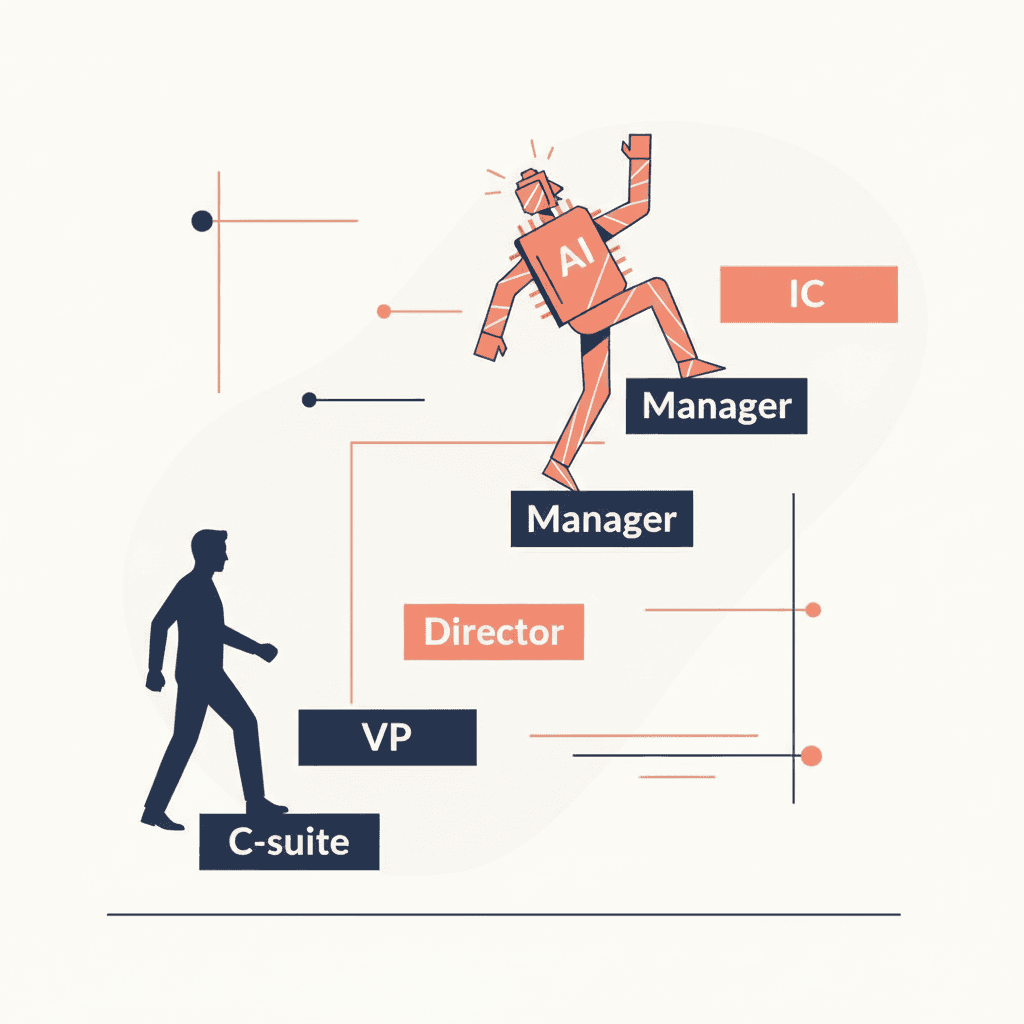
The gap widens hard with seniority. We dug into this in AI SDR Reply Rates Collapse at the C-Suite, and third-party data confirms the pattern. C-level contacts (CEO, CFO, COO, CRO) replied to human emails at 6.2% vs lower rates for AI. Enterprise buyers pattern-match AI boilerplate faster than anyone, and the penalty is steep.
It also widens dramatically at enterprise account size. Firms with more than 10,000 employees replied at 0.22% per email, versus 0.72% for companies with ten or fewer people. AI SDRs sending into F500 inboxes are paying a reply tax that mid-market senders simply do not see.
The hybrid arm nobody is talking about enough
The most useful data point in the whole debate is not actually from the 100K study. It is from Saleshandy's 12,000-email test, which ran a third arm that most comparisons skip.
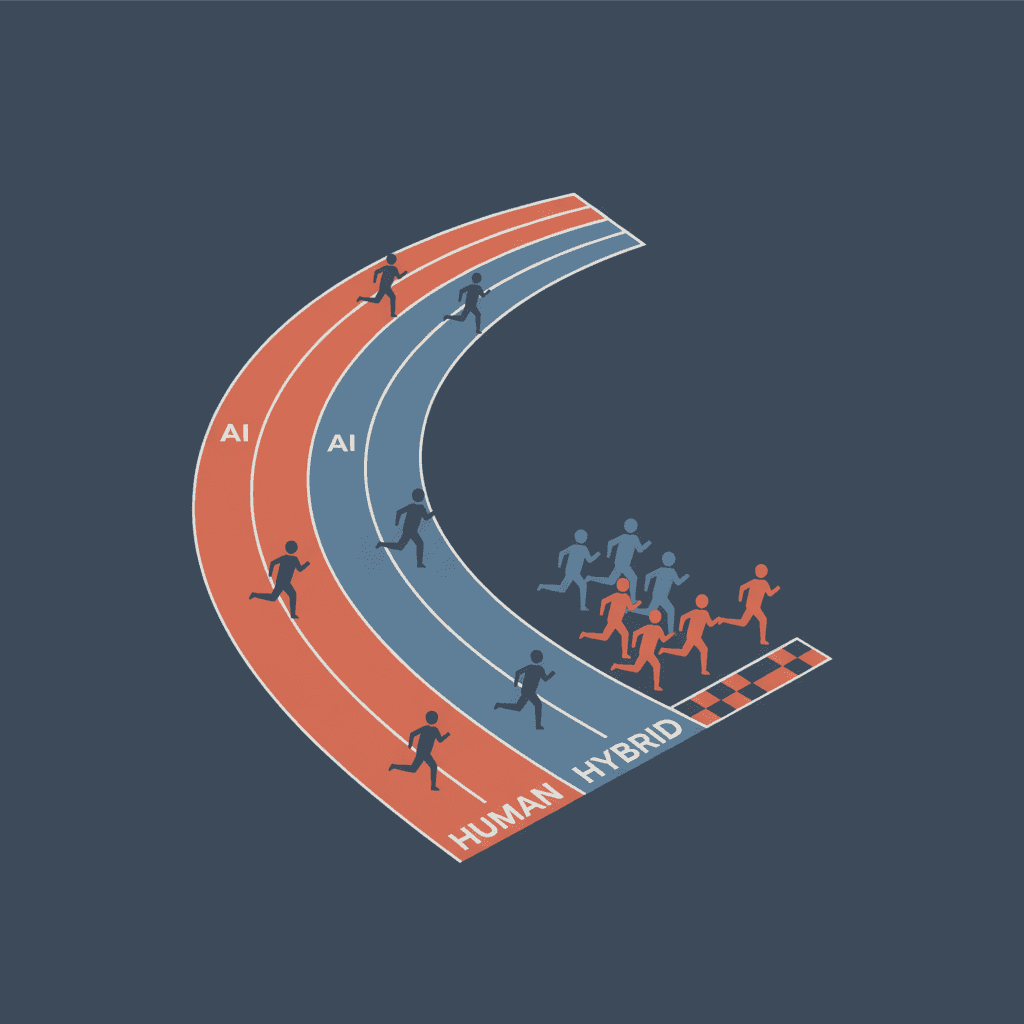
A 12,000-email Saleshandy test found that its hybrid workflow produced a 14.7% reply rate, compared with 10.4% for human-only and 4.1% for AI-only emails. Its 3.1% spam-flag rate was also close to the human arm's 2.9%. A separate benchmark replicated the direction, if not the magnitude. Fully AI-generated emails hit a 2.4% reply rate, fully human-written emails 3.8%, and AI-assisted emails with human editing 5.1%.
Two takeaways matter here.
First, the hybrid arm beats both parents. A human spending 60 seconds editing an AI draft lifts reply rate above pure human writing, not just above AI. Composition is cheaper than ideation, and AI handles the ideation.
Second, the spam-flag story is what actually drives the economics. In Saleshandy's 12,000-email test, AI-only emails were spam-flagged at 7.8% versus 2.9% for human-written ones. Human editing drops that to 3.1%. If you are measuring cost-per-qualified-meeting, the deliverability penalty on fully autonomous sends compounds faster than the copy penalty ever will.
Hunter's own 31-million-email 2025 analysis arrived at the same conclusion from a different angle. Manually edited emails outperform fully automated ones by +18% in reply rate (5.2% vs 4.4%).
The cost-per-meeting math the vendor pages hide
Once you accept that hybrid wins on reply rate and deliverability, the next question is whether the cost structure survives. For agencies in particular, the answer depends on volume per client, not on headline AI pricing.
Cold-email automation sits around $100 to $400 per sending domain per month once you add infrastructure. A reasonable mid-market agency SDR costs $5,000 to $8,000 per month fully loaded. An AI SDR seat runs anywhere from $250 (after Artisan's May 2026 price cut) to $1,500 depending on vendor.
At the 4.1% AI reply rate and 0.7% meeting-booked rate from the 100K study, 10,000 AI-generated sends per month produce roughly 410 replies and 70 meetings. At the hybrid 14.7% / 3.5% assumption, the same 10,000 sends produce 1,470 replies and roughly 350 meetings, but only if a human can realistically edit 10,000 drafts a month. They cannot. The real hybrid ceiling is closer to 2,500 to 4,000 edited sends per editor per month.
That is the economic shape of the debate. Full AI SDR scales to arbitrary volume at a lower reply rate. Hybrid caps at human editing capacity but doubles the per-send conversion. Everything else is implementation detail.
It also explains why we keep seeing the pattern we unpacked in AI SDR ROI. Why Buyers Are Cancelling at Renewal. The vendors priced on volume delivered the volume. Buyers measured on booked meetings did the math at renewal.
Why email is harder than LinkedIn for AI right now
One wrinkle worth calling out, because it changes the stack decision for 2026. The AI-vs-human gap on cold email is substantially bigger than the same gap on LinkedIn messages, and the direction of pressure is different.
On email you are fighting Gmail and Microsoft's 2024 sender guidelines plus every receiving MTA's spam heuristics, and AI-generated copy triggers more of those heuristics than human copy. We wrote about the inbox-side pressure in The Google/Yahoo/Microsoft Rejection Wall. On LinkedIn the pressure is a different algorithm (360Brew) and a different penalty (connection-request throttling), but AI-assisted copy actually performs reasonably well inside a sent message. The platform does not spam-filter it.
Which is why the more interesting 2026 stack question is not AI vs human. It is email vs LinkedIn as the primary channel for the hybrid pod to operate in. Our take on that bifurcation is in The Bifurcation. Cold Lists Get 3%, Signals Get 55%.
A decision framework tied to the 1.1-point gap
Some practical rules for sales leaders choosing between full AI SDR and hybrid pods, each tied back to the matched data.
- Target ACV under $15K, SMB ICP, high-volume motion. Full AI SDR is defensible. The 1.1-point reply gap costs less than the headcount it replaces. Accept the 71% inbox placement and overbuild domain count.
- Target ACV $15K to $75K, mid-market ICP. Run hybrid. One human editor per 2,500 to 4,000 drafts per month is the sweet spot where the Saleshandy 14.7% hybrid number is actually reproducible.
- Target ACV above $75K, enterprise ICP, VP and above personas. Human-led. The seniority gradient on reply rate is too steep to absorb a 1.1-point penalty. AI can draft research briefs. Humans write the send.
- If your deliverability team is not already monitoring Postmaster scores by sending identity, do that first. The 71% vs 86% inbox-placement gap is where the real money leaks, not the 1.1-point reply gap.
- Measure positive reply rate, not raw replies. The AI-vs-human gap is proportionally wider on positive replies, and that is the number your SDRs convert into meetings.
Whichever model you pick, the same two levers compound harder than any AI-vs-human choice. 58% of replies arrive on Step 1 of a cold email campaign with Steps 2-4 contributing another 42%. And research across 3 million cold emails found that 50-125 word emails achieve a 2.4x higher reply rate than emails over 200 words. First touch, short. That is still the game.