
Gmail Rejects Cold Email: LinkedIn-First Sequences Win 2026
Gmail's November 2025 shift from 4xx deferrals to 550 rejections broke email-first cadences. Here's the LinkedIn-led sequence that replaces them.
By Luke Henrik8 min read
TL;DR
- Gmail's November 2025 shift from 421 deferrals to permanent 550-5.7.26 rejections broke email-first sequences at the SMTP layer. 550s are silent from the sender side and compound domain reputation damage.
- The practical spam-rate ceiling is 0.10%, not the published 0.3%. Three complaints per 3,000 sends starts throttling.
- Instantly's 2026 platform average is 3.43% reply rate (top quartile 5.5%, top 10% above 10.7%), down from Belkins' 6.8% in 2023 — a roughly 50% decline in three years.
- LinkedIn-first sequencing (profile view → engage → connect → DM → email as follow-up #4-5) produces materially more replies per 500 prospects because email runs against warm, not cold, volume.
- Email isn't dead — it's a downstream amplifier for attachments, non-LinkedIn personas, and account multithreading. Lead with LinkedIn; let email close the gap.
On this page
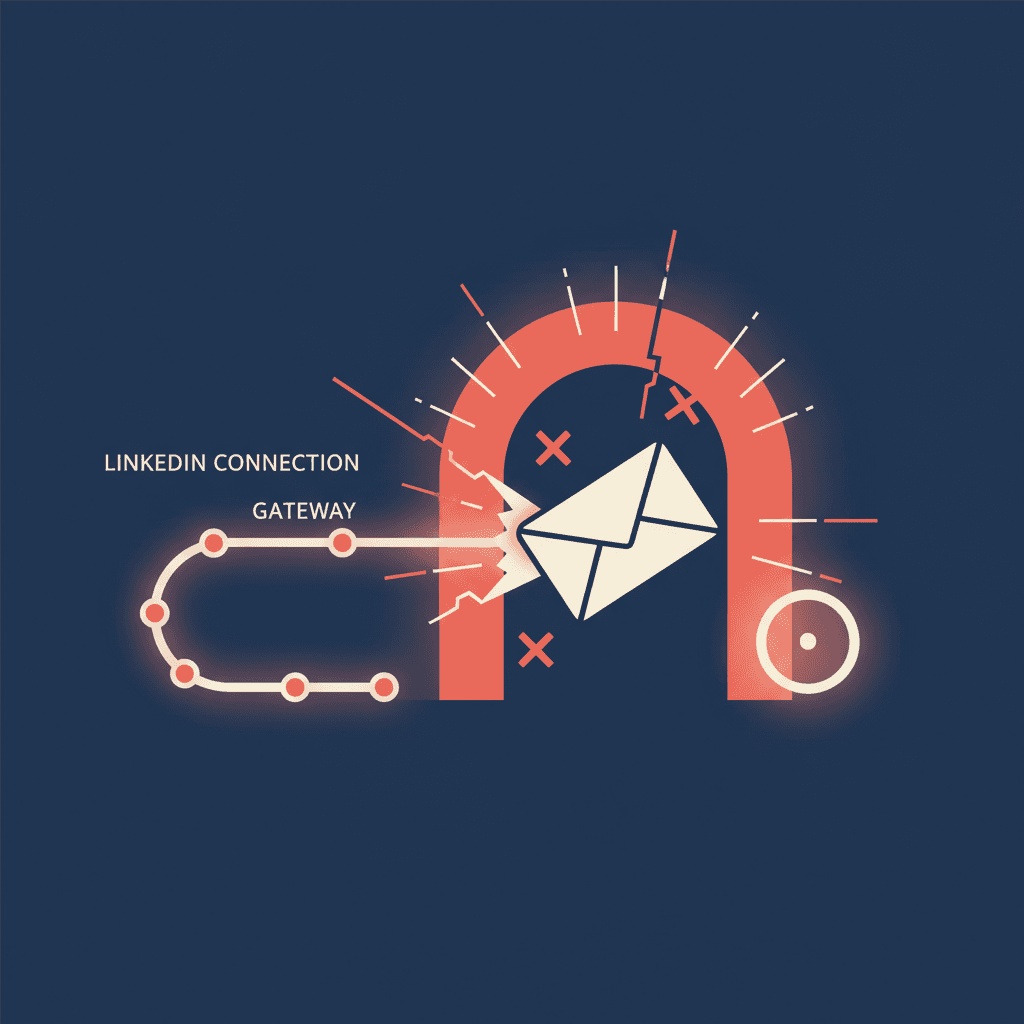
On November 1, 2025, Gmail stopped filtering non-compliant cold email and started rejecting it outright at the SMTP layer. The error code — 550-5.7.26, a permanent rejection for messages that fail sender-authentication requirements, usually missing or misaligned SPF, DKIM, or DMARC — now means mail is refused outright instead of deferred. No retry. No spam folder. Just gone.
The operational consequence is bigger than most outbound leaders have internalized. Email-first sequences — the ones where you send a cold email, then connect on LinkedIn as a follow-up — now assume delivery that often isn't happening. Meanwhile, reply rates on the email channel have cratered: Instantly's 2026 benchmark report, drawn from billions of sends, puts the platform-wide average at 3.43% with top performers above 10%, down from Belkins' 5.8% in 2024 and 6.8% in 2023 across 16.5 million emails.
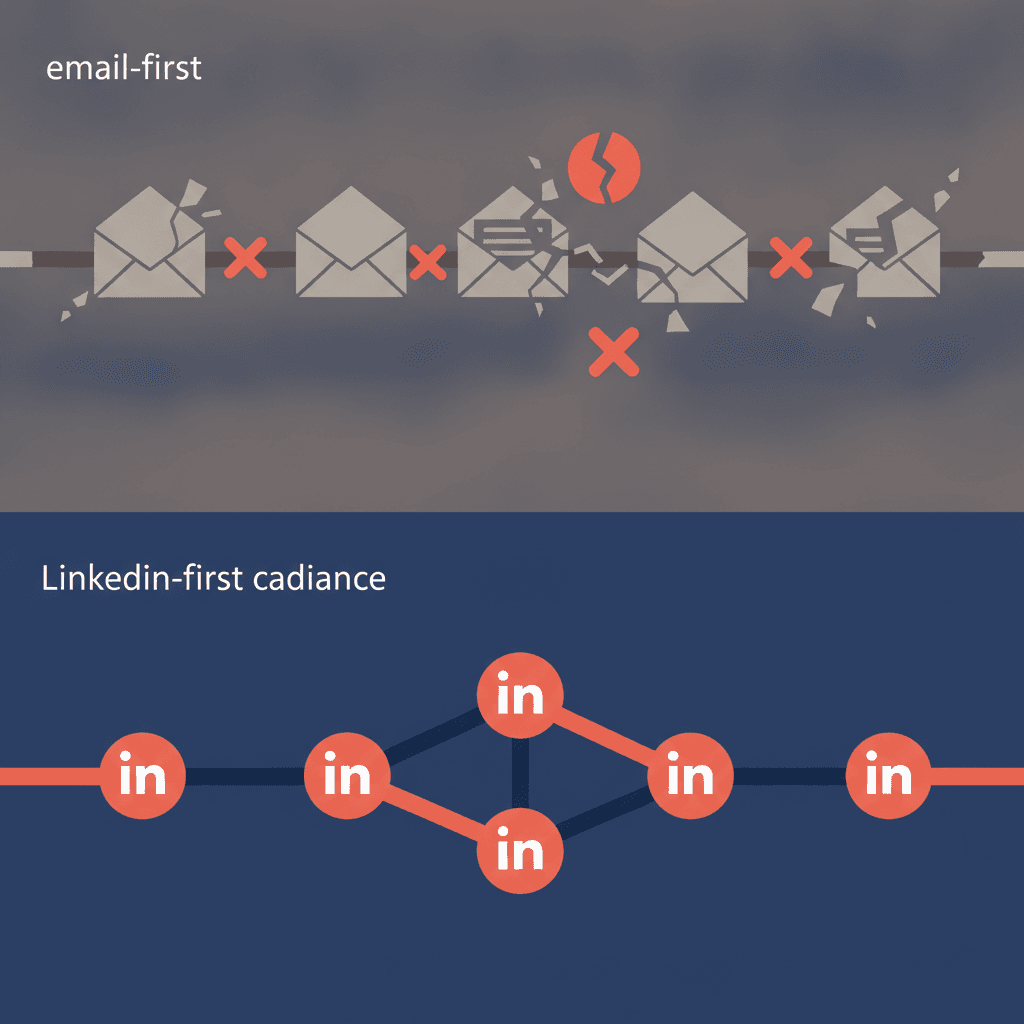
The sensible response isn't better deliverability hygiene (though you should fix that too). It's reordering the sequence so LinkedIn opens the conversation and email becomes the follow-up, not the hook. That's the piece most teams haven't rewired yet — and it's where the current reply-rate gap lives.
Why Email-First Broke First
The collapse wasn't gradual. It compounded three things at once.
First, the rejection wall. Google's November 2025 shift to permanent 550 rejections means non-compliant bulk email is now refused outright at the SMTP level and will not be retried. A 550 rejection is silent from the sender's side unless you're specifically monitoring bounce logs — the email simply fails to deliver, and non-compliance can go unnoticed for weeks while a growing percentage of Gmail-addressed sends vanish.
Second, the spam-rate ceiling. The published Google threshold is 0.3%, but Google Postmaster Tools guidance says keep spam rate below 0.1% and never let it reach 0.3%. The practical ceiling to actually land inbox is 0.10%. Three complaints per 3,000 sends is enough to start throttling.
Third, the reply-rate decline. The channel averages collapsed in parallel. Belkins measured 6.8% in 2023 and 5.8% in 2024, and Instantly's platform-wide 2026 average sits at 3.43%. If your top-quartile goal is Instantly's 5.5% top-quartile and 10.7% top-decile benchmark, email-first cadences are now fighting both delivery and attention at the same time.
Cold Email Deliverability 2026: What Actually Changed at the SMTP Layer
Before late 2025, non-compliant mail got 421 codes — a temporary rejection where the sending platform would retry delivery, and often the email would go through on the second or third attempt. That grace period is over.
The new error map matters because it tells you whether you can recover without burning a domain:
- 421-4.7.26 / 421-4.7.32 — temporary deferrals. Fixable. Retry will work after you align SPF/DKIM/DMARC.
- 550-5.7.26 — permanent. "Your email has been blocked because the sender is unauthenticated" — Gmail requires senders to authenticate with either SPF or DKIM.
- 550-5.7.1 — IP flagged for unsolicited mail. Reputation damage, not auth.
- 550 5.7.515 — Microsoft equivalent of 550-5.7.26, enforced since May 2025.
The scoping nuance most posts miss: the Gmail bulk-sender rules formally apply to senders exceeding 5,000 messages per day to Gmail addresses. But the classification is permanent: cross 5,000 daily messages once, and the requirements apply to your domain from then on. And the authentication requirements (SPF, DKIM, DMARC alignment) are already enforced on everyone — not just bulk senders. So "we only send 300/day" is not a defence.
The LinkedIn-First Sequence That Replaces Email-Led Cadences
Here's the restructure. The core idea: by the time email enters the sequence, the recipient already knows your name, your face, and your company. The sender is no longer a stranger — which is the single biggest variable that moves reply rate when deliverability math is this tight.
Day 0 — Profile view. Visit the prospect's profile from the sending account. No action, no connect. This creates a passive touch and often triggers a reciprocal visit.
Day 2 — Engagement. Comment thoughtfully on one of their recent posts (not a reaction — a comment with substance). This builds pattern recognition before any outbound hits.
Day 4 — Connection request. No note. LinkedIn research shows acceptance rates with and without a note are statistically identical, but notes without a note preserve your note budget for warmer prospects where it actually lifts post-accept reply rate.
Day 6-9 — Accept window. 63% of acceptances arrive within 24 hours and 88% within a week per Botdog's 16,492-request dataset. If no accept by day 9, let it sit — don't send an InMail yet.
Day 10 — First DM (post-accept). Short, context-anchored, under 400 characters. This is the money touchpoint. Expandi's data on 13.2 million requests shows post-connection messages average 10.4% reply rate across industries.
Day 14 — Email #1. Now the prospect has seen your profile view, your comment, your connect, and your DM. The cold email isn't cold anymore. Reference the LinkedIn thread explicitly: "Following up on our LinkedIn connection — wanted to share the one-pager I mentioned."
Day 18 — DM #2 or voice message. Voice notes on LinkedIn convert dramatically higher than text follow-ups when used sparingly.
Day 24 — Email #2 (break-up or value add). Final touch. Either a one-line break-up or a resource drop with no CTA.
The critical rule: a campaign in LinkedCamp sends from ONE LinkedIn account. There is no LinkedIn sender rotation (and anyone offering it is risking the account — see the 20-invite rule). Email steps, however, rotate across multiple connected mailboxes to keep per-domain volume well below any 5xx trigger.
LinkedIn vs Email Outbound: The Reply-Rate Math
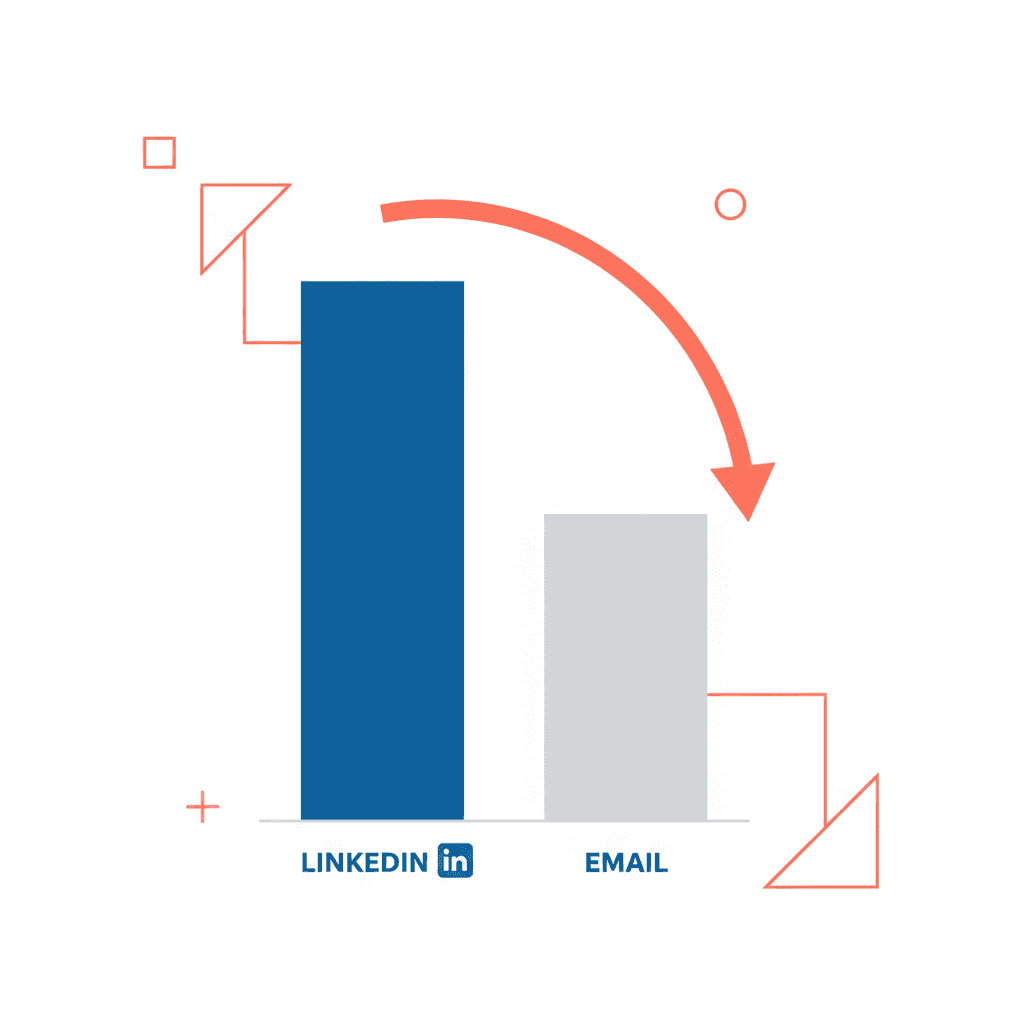
Here's the side-by-side that makes the restructure obvious. Both scenarios target 500 prospects per sender per month.
Email-first (pre-November 2025 default):
- 500 emails sent → ~17% lost to filters or 550 rejections → 415 delivered
- 415 × 3.43% platform-average reply rate = ~14 replies
- LinkedIn as follow-up at day 7: 300 connects → 28.5% accept × 10.4% reply = ~9 replies
- Total: ~23 replies per 500 prospects
LinkedIn-first (post-November 2025):
- 400 connection requests (within the ~100/week safe cap) → 28.5% acceptance across B2B outbound = 114 accepts
- 114 × 10.4% DM reply = ~12 replies from LinkedIn alone
- 500 emails as follow-up (sent only to connected prospects + non-accepts) → delivery much cleaner because volume per mailbox drops, spam-rate stays under 0.10%
- 500 × ~5% reply rate (now warm) = ~25 replies from email
- Total: ~37 replies per 500 prospects
The gap isn't magic. It's that LinkedIn-first converts cold volume into warm volume before email ever runs, which protects both deliverability math (lower complaint rate from warmer sends) and reply math (familiarity bias). This matches the pattern in the cold-email-step-one data where the first touch in a well-sequenced cadence does disproportionate work.
What You Lose by Not Restructuring
Three compounding costs if you keep email-first:
- Burned domains. Non-compliant mail gets bounced hard, logged against your domain reputation, and counted toward your bounce rate — every 550 rejection actively damages your sender score. Replacement domains cost $12-15 each plus 4-6 weeks of warm-up — real money if you're rotating five domains per sender.
- Silent failure. Because 550s don't surface in most reporting dashboards, teams discover the problem through a sudden drop in replies — usually 3-4 weeks after it started. By then you've already damaged the domain reputation.
- Spam-rate death spiral. Once you cross 0.3% in Postmaster Tools v2, which replaced the reputation gradient (Good/Medium/Low) with a binary Compliance Status (Pass/Fail), you can't "improve" your way back fast. You have to pause volume entirely.
Multichannel Outbound 2026: Where Email Still Earns Its Spot
Email isn't dead. It's demoted. The channel still does three things LinkedIn can't:
- Attachments and long-form. PDFs, decks, proposals — things that don't survive a 300-character LinkedIn DM.
- Non-LinkedIn personas. Blue-collar, trades, some finance verticals where LinkedIn penetration is thin.
- Volume for enterprise multithreading. When you need to touch 8-12 people at one account, email scales where LinkedIn connect limits don't.
The move is: LinkedIn opens, email amplifies. Not the reverse. If you're running the Clay + LinkedIn signal-based motion, the signal fires a LinkedIn touch first and queues the email for 72-96 hours later with context from the LinkedIn interaction baked into the subject line.
The tool implication for agencies: you need one platform that runs the LinkedIn sequence (connect → engage → DM) and triggers email as a downstream step, with mailbox rotation on the email side only. Running LinkedIn in one tool and email in another is how timing gaps and double-touches happen. LinkedCamp's agency plan handles both in a single sequence builder — and because each LinkedIn account gets a country-matched dedicated IP, the LinkedIn side stays safe at the volumes needed to feed email as follow-up.


